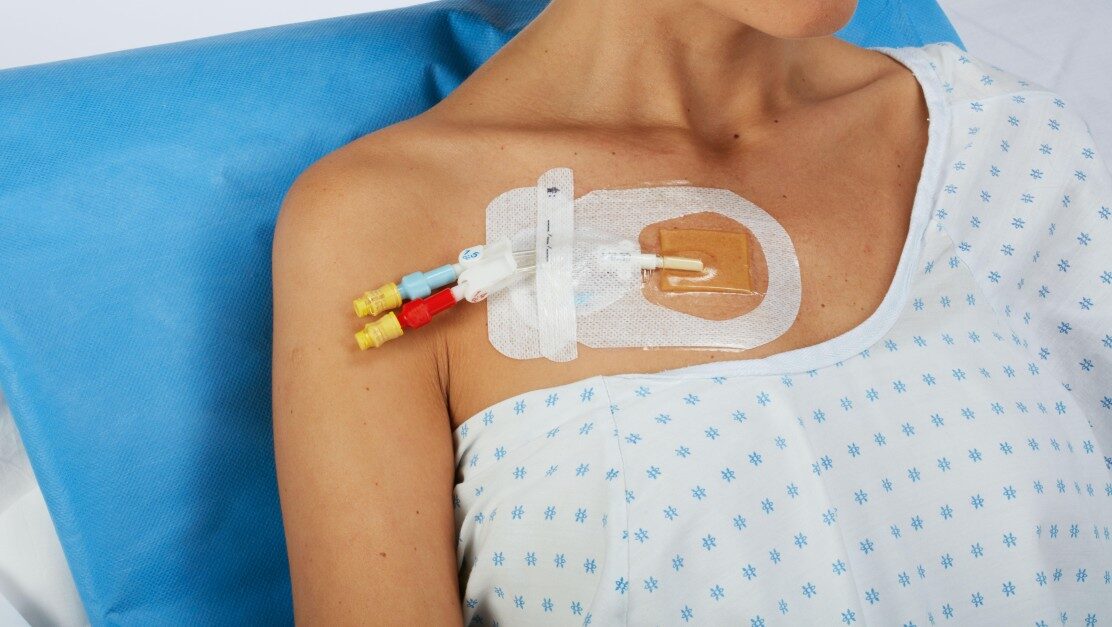
Dialysis catheters (temporary or tunnelled) require strict aseptic dressing management to prevent infections (e.g., CLABSI) and maintain patency.
1. Types of Dialysis Catheters
| Type | Location | Duration | Dressing Needs |
| Non-tunneled | IJ/Femoral/Subclavian | Short-term (1–2 weeks) | Transparent film + chlorhexidine |
| Tunnelled (e.g., Permacath) | Internal Jugular | Months–years | Same as non-tunnelled |
| Cuffed (e.g., Hickman) | Subclavian/Jugular | Long-term | Sterile gauze + transparent cover |
2. Dialysis Catheter Dressing Protocol
Supplies Needed:
✔ Chlorhexidine (2%) or povidone-iodine
✔ Sterile gloves, mask, drape
✔ Transparent semi-permeable film (e.g., Tegaderm™)
✔ Sterile gauze (if exudate present)
✔ Antimicrobial ointment (if institution protocol)
Step-by-Step Dressing Change:
- Hand hygiene + sterile gloves.
- Remove old dressing (peel toward catheter to avoid dislodgment).
- Inspect site for:
- Erythema, pus, tenderness (signs of infection)
- Catheter integrity (cracks, leaks)
- Clean site with chlorhexidine (circles, outward motion).
- Apply antimicrobial ointment (if ordered, e.g., bacitracin).
- Cover with transparent film (or gauze + tape if exudate).
- Secure catheter (avoid tension/kinking).
- Label with date, time, and initials.
3. Key Maintenance Practices
✅ Frequency:
- Change every 7 days (or sooner if loose/soiled).
- Post-dialysis inspection for blood leaks.
✅ Hygiene:
- No submerging in water (use waterproof covers for showers).
- Avoid touching the catheter hub (sterile caps always on).
✅ Flushing/Locking:
- Heparin lock (1000 U/mL) post-dialysis to prevent clots.
- Never infuse fluids outside dialysis (risk of infection).
4. Complications & Management
| Complication | Signs | Action |
| Catheter Infection (CLABSI) | Fever, redness, purulent drainage | Blood cultures, antibiotics may need removal |
| Catheter Thrombosis | Poor flow, inability to aspirate | Alteplase instillation |
| Catheter Dislodgement | Visible migration, bleeding | Clamp, secure, CXR to check position |
| Exit-Site Infection | Local redness, pain | Topical/systemic antibiotics |
5. When to Remove the Catheter?
- No longer needed (e.g., mature fistula/graft).
- Unresolved infection (persistent bacteremia).
- Catheter malfunction (fibrin sheath, thrombosis).
Removal Steps:
- Supine position, sterile field.
- Remove sutures, apply pressure while pulling.
Cover site with occlusive dressing × 24 hrs.