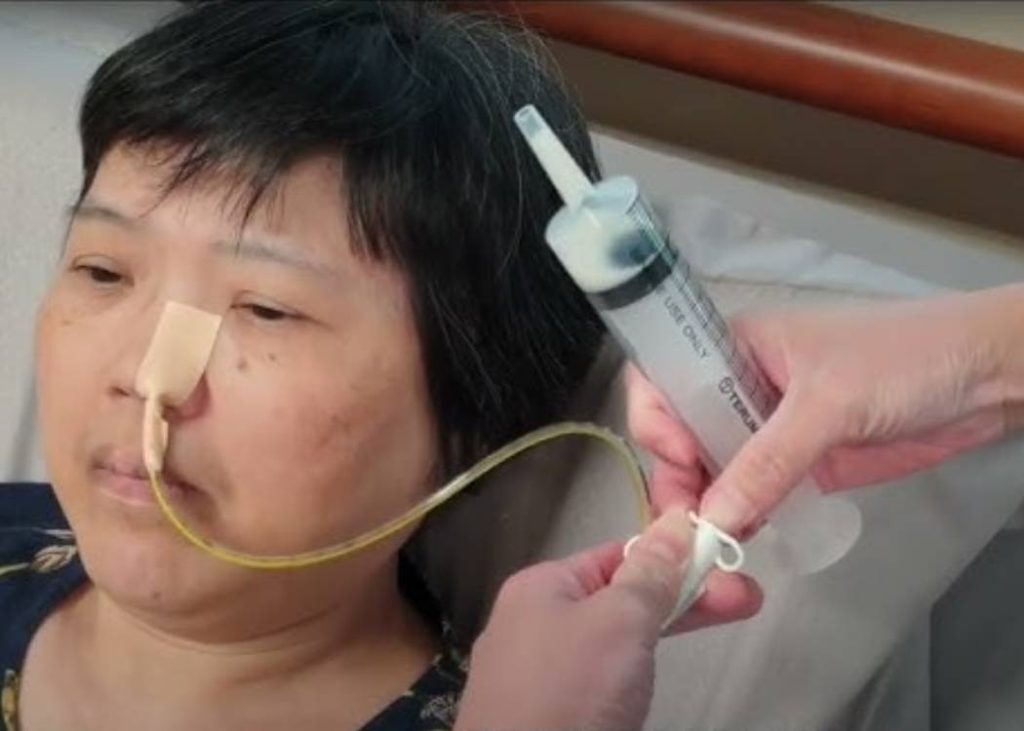
A Ryle’s tube (NG tube) is a flexible tube inserted through the nose into the stomach for feeding, medication administration, or gastric decompression.
1. Indications for Ryle’s Tube
✔ Enteral feeding (unable to swallow, post-stroke)
✔ Gastric drainage (bowel obstruction, post-op ileus)
✔ Medication delivery (when oral intake is unsafe)
✔ Gastric lavage (poisoning, GI bleeding)
2. Equipment Needed for Insertion
- Ryle’s tube (size: 12–18 Fr for adults)
- Water-soluble lubricant (2% Lignocaine jelly)
- Syringe (50–60 mL) for aspiration check
- Stethoscope (for auscultation confirmation)
- Adhesive tape/securement device
- pH paper (to confirm gastric placement)
3. Step-by-Step Insertion
A. Preparation
- Measure tube length (nose → earlobe → xiphoid process).
- Lubricate tip (water-based jelly).
- Position patient (upright at 45° if possible).
B. Insertion Technique
- Insert via nostril (ask patient to swallow sips of water if conscious).
- Advance gently until marked length is reached.
- Confirm placement:
- Aspirate gastric contents (pH ≤5.5 = gastric).
- Auscultate (insufflate 20–30 mL air → “whoosh” sound).
- Chest X-ray (gold standard if doubt exists).
- Secure tube (nasal tape or commercial holder).
4. Daily Care & Maintenance
✔ Flush with 30 mL water before/after feeds/meds.
✔ Check residual volume every 4–6 hrs (if for feeding):
- 500 mL? Hold feed, reassess.
✔ Oral/nasal hygiene (clean nostrils, mouth care).
✔ Change tube every 4–6 weeks (or per protocol).
5. Complications & Management
| Complication | Signs/Symptoms | Action |
| Tube dislodgement | No gastric aspirate, coughing | Recheck placement/reinsert |
| Nasal irritation | Pain, ulceration | Switch nostrils, use smaller tube |
| Aspiration pneumonia | Cough, fever, hypoxia | Stop feeds, suction, antibiotics |
| Tube blockage | Unable to flush | Try warm water flush or replace |
| Sinusitis | Facial pain, nasal discharge | Remove tube, antibiotics |