Chemoport Care: Maintenance, Dressing, and Complications
A chemoport (also called an implanted venous port) is a long-term central venous access device used for chemotherapy, frequent blood draws, or IV medications. Proper care is essential to prevent infection, thrombosis, or mechanical failure.
1. Routine Chemoport Care
A. Accessing the Port
- Sterile technique is mandatory (mask, gloves, drape).
- Clean skin with chlorhexidine/alcohol (allow to dry).
- Use a non-coring (Huber) needle to prevent damage.
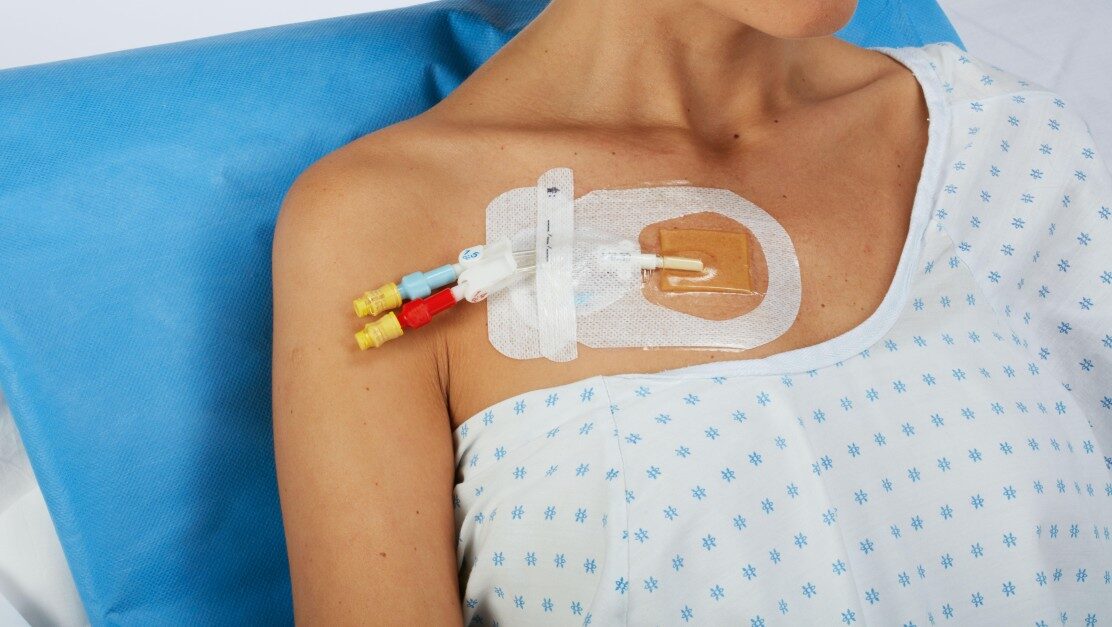
- Secure with transparent film dressing (e.g., Tegaderm™).
B. Flushing & Locking
- Flush with 10–20 mL saline before/after each use.
- Heparin lock if not in frequent use.
- Pressure limit: Never flush against resistance (risk of rupture).
C. Dressing Changes
- Change every 7 days (or sooner if loose/soiled).
- If the needle remains accessed, change dressing every 3–7 days.
2. Chemoport Dressing Steps
Supplies Needed:
✔ Sterile gloves
✔ Chlorhexidine/alcohol wipes
✔ Transparent film dressing
✔ Sterile gauze (if needed)
✔ Huber needle (if accessing)
Procedure:
- Hand hygiene + sterile gloves.
- Remove old dressing, inspect for infection (redness, pus).
- Clean site with chlorhexidine (circles, outward motion).
- Access port (if needed) with Huber needle.
- Apply a transparent dressing, label with date.
3. Potential Complications & Management
| Complication | Signs/Symptoms | Action |
| Infection | Fever, redness, pus | Culture, antibiotics, may need removal |
| Thrombosis | Swelling, pain, difficulty flushing | Anticoagulants (e.g., heparin) |
| Catheter Occlusion | Unable to flush/aspirate | Alteplase (clot buster) |
| Port Flipping/Migration | Unable to palpate the port | Imaging (X-ray), surgical revision |
| Needle Dislodgement | Leakage under dressing | Stop infusion, redress |
4. When to Remove the Chemoport
- No longer needed (e.g., end of chemotherapy).
- Infection not resolving with antibiotics.
- Catheter fracture/malfunction.
- Thrombosis unresponsive to treatment.
(Removal requires a minor surgical procedure.)
Key Takeaways:
✅ Strict sterile technique prevents infections.
✅ Flush monthly if unused to prevent clots.
✅ Never use a standard needle (only Huber).
✅ Monitor for complications (fever, swelling).