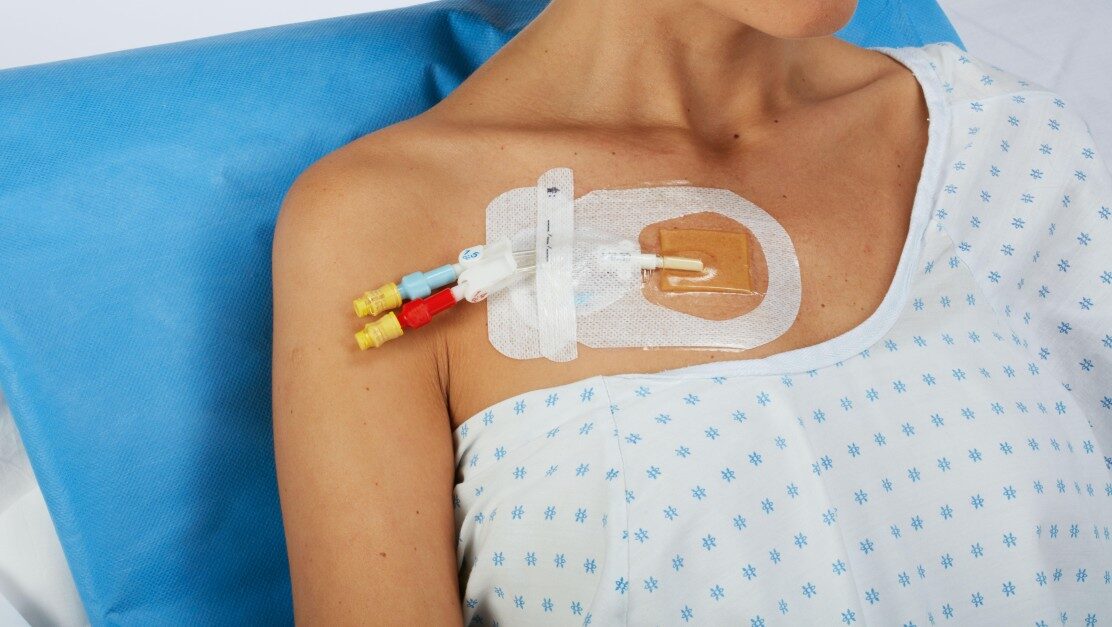
A central line (central venous catheter) is a long, flexible tube placed into a large vein (e.g., subclavian, jugular, femoral) for long-term IV access, hemodynamic monitoring, or critical medications.
1. Types of Central Lines
| Type | Vein Access | Duration | Common Uses |
| Non-tunneled | Subclavian, IJ, Femoral | Short-term (days-weeks) | ICU, emergencies |
| Tunneled (e.g., Hickman) | Subclavian/Jugular | Months-years | Chemo, TPN |
| PICC | Peripheral → SVC | Weeks-months | Antibiotics, long-term meds |
| Port-a-Cath | Subclavian | Years | Chemotherapy, frequent access |
2. Central Line Insertion (Sterile Technique)
A. Preparation
✔ Consent, verify coagulation status (low platelets → higher bleeding risk).
✔ Ultrasound-guided (reduces complications).
✔ Full sterile barrier (mask, gown, gloves, drape).
B. Steps
- Position (Trendelenburg for IJ/subclavian).
- Locate vein (US-guided needle puncture).
- Insert guidewire, then dilate tract.
- Thread catheter over wire, confirm tip in SVC/IVC (CXR post-insertion).
- Suture securement, apply sterile dressing.
3. Maintenance & Dressing Care
✔ Change dressing every 7 days (or if loose/soiled).
✔ Chlorhexidine cleaning (circular motion, let dry).
✔ Cap/port disinfection (alcohol scrub, 15 sec).
✔ Flush lumens (saline + heparin if not in use).
⚠️ Never use scissors near a catheter (risk of accidental cut).
4. Complications & Management
| Complication | Signs | Action |
| Infection (CLABSI) | Fever, redness, pus | Blood cultures, antibiotics may need removal |
| Pneumothorax | Dyspnea, ↓ breath sounds | Chest X-ray, possible chest tube |
| Catheter thrombosis | Swelling, poor flow | Alteplase, consider removal |
| Malposition | Arrhythmias, neck swelling | CXR, reposition/remove |
| Air embolism | Sudden hypoxia, hypotension | Left lateral decubitus, 100% O₂ |