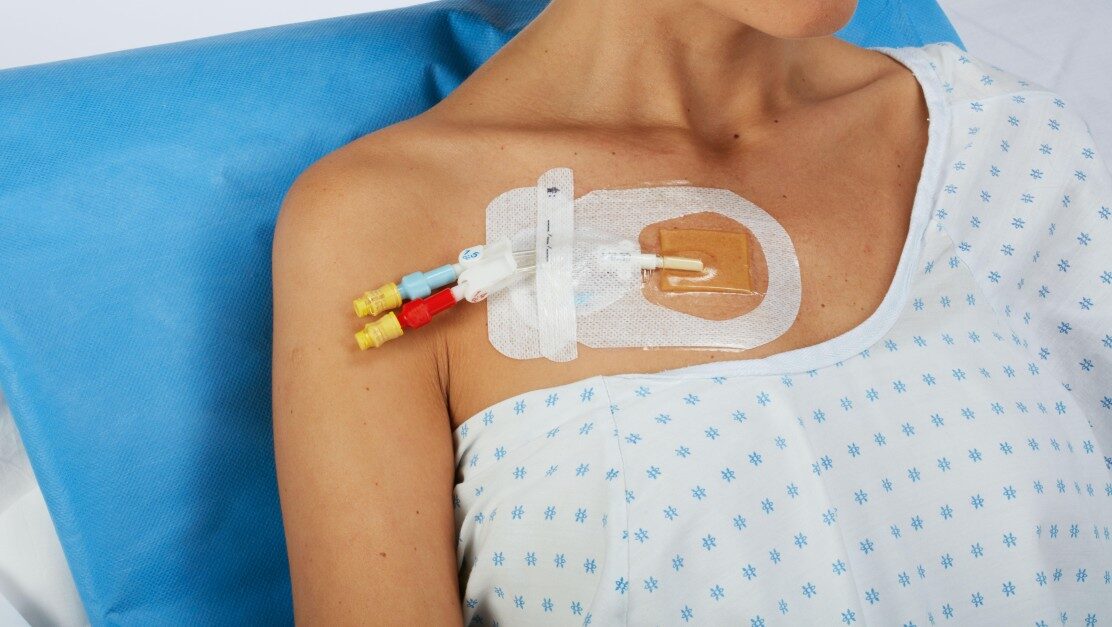
A sharp cut stitch (also called a “rip stitch” or “emergency release stitch”) is a specialised suture technique used to secure chest tubes, drains, or central lines so they can be quickly removed in an emergency.
Purpose:
- Allows rapid removal of a tube/drain without needing scissors.
- Useful if the tube gets accidentally pulled, needs urgent removal, or if the patient is at risk of dislodging it.
How It Works:
- The suture is tied in a way that leaves a long, uncut loop (or a “tail”).
- Pulling the loop unravels the knot instantly, freeing the tube.
Step-by-Step Technique:
1. Standard Suture Placement
- Insert the suture (usually non-absorbable, like silk or nylon) near the tube insertion site.
- Wrap it snugly around the tube in a circular fashion (like a Roman sandal tie).
2. Creating the “Sharp Cut” Mechanism
- Instead of cutting the suture short, leave a long loop (≥10 cm).
- Secure the loop with tape (to prevent accidental pulling).
3. Emergency Release
- If rapid removal is needed, pull the loop firmly → suture unravels → tube is released.
When to Use a Sharp Cut Stitch:
✔ Chest tubes (risk of tension pneumothorax if pulled)
✔ Central venous catheters (emergency removal if bleeding/infection)
✔ Pericardial drains (risk of cardiac tamponade)
✔ Uncooperative/agitated patients (prevents traumatic removal)
Advantages vs. Traditional Suture:
| Feature | Sharp Cut Stitch | Traditional Suture |
| Removal Speed | Instant release | Requires scissors |
| Safety | Prevents accidental tube dislodgment | Risk of tube being pulled out with tension |
| Ease of Use | Simple once learned | Standard technique |